Voice Search vs. AI Search: What Local Businesses Need to Know
People have been talking to their phones for a decade. But asking Alexa for the weather is very different from asking Perplexity for a contractor. Here is the difference.
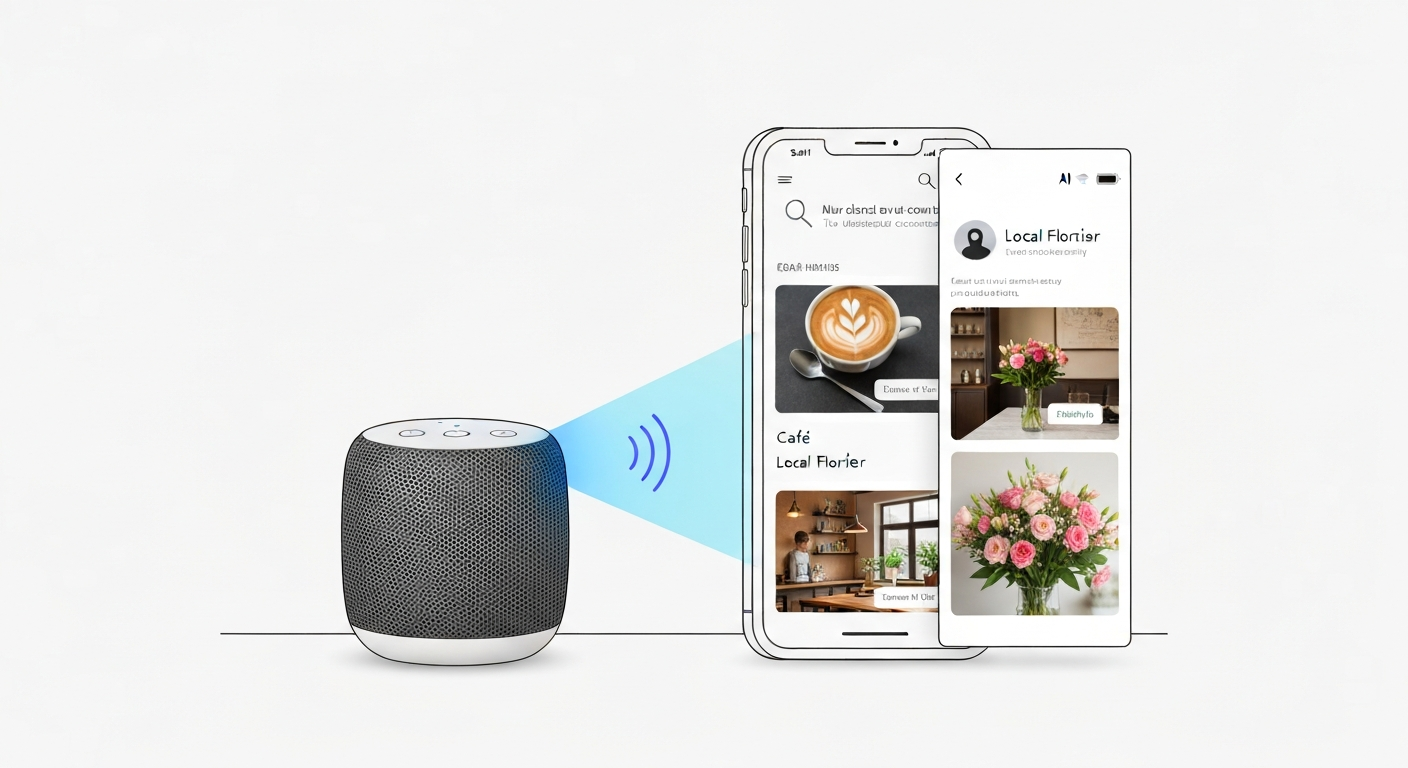
For years, marketing agencies told local businesses they needed to 'optimize for voice search.' The strategy usually involved writing FAQ pages and ensuring Yelp profiles were updated so Alexa or basic Siri could read a business name aloud. But the landscape has shifted. Traditional voice search is being rapidly replaced by conversational AI search, and the rules of engagement are entirely different.
The Fundamental Difference in How They Work
Traditional voice search is essentially a text-to-speech reader for standard search engine results or specific directory listings. If you ask Alexa for a plumber, it typically pulls the top result from Yelp or a local directory and reads it to you. It is a retrieval system.
AI search (like ChatGPT, Gemini, or Perplexity) is a synthesis system. It does not just read a directory listing. It analyzes structured data from across the web, evaluates trust signals, reads the context of reviews, and generates a custom recommendation based on the specific nuances of the user's prompt.
Why 'Voice SEO' Strategies Fail in AI Search
If your strategy relied entirely on having a strong Google Business Profile and a complete Yelp page, you were well-positioned for traditional voice search. However, AI engines require a much broader footprint.
- AI requires Entity Verification: ChatGPT needs to see your business data corroborated across dozens of authoritative sources, not just one or two major directories.
- AI reads Schema Markup: Traditional voice search rarely cared about JSON-LD. AI crawlers rely heavily on structured data to understand exactly what services you provide.
- AI analyzes Sentiment Context: A 5-star rating was enough for Alexa. ChatGPT actually reads the text of your reviews to see if they mention the specific problem the user is asking about.
The Intent Gap: Traditional voice search handles 'near me' queries (e.g., 'Coffee shop near me'). AI search handles 'best for' queries (e.g., 'Which local HVAC company is best for emergency mini-split repair?'). High-ticket local services live in the 'best for' category.
How to Transition Your Strategy
Local businesses do not need to abandon their existing profiles, but they must upgrade their data infrastructure to be visible to generative engines.
- Move beyond basic directories and ensure your entity data is injected into the major data aggregators that feed AI knowledge graphs.
- Implement detailed LocalBusiness schema on your website, explicitly listing every high-value service you offer.
- Shift your review generation strategy from simply asking for '5 stars' to asking customers to mention the specific service you provided.
Get Your Free AI Search Visibility Audit. Find out if your business is stuck in the voice search era or if you are ready to be recommended by modern AI engines.
One business per area
We only partner with one service provider per industry, per city / local radius.
Once a spot is taken, it's locked.